
Some adventures begin with a map. Others begin with a flashlight and a willingness to step into complete darkness.
Hidden beneath the forests surrounding the mighty Mount St. Helens lies one of Washington’s most unforgettable underground experiences: Ape Cave Interpretive Site.
Stretching an incredible 2.5 miles beneath the earth, Ape Cave is the third-longest lava tube in North America—and unlike many natural wonders, this one invites you to descend straight into its shadowy depths.
The site is seasonal
Check national and government websites for more information.
Get tickets here: https://www.recreation.gov/timed-entry/10086990
The moment you arrive, towering evergreens and volcanic landscapes set the stage. It feels like stepping into a scene from an adventure movie. Yet the real excitement waits below the surface.
Washington Trail’s Association has great information about the Ape Caves.
For more information click here: https://www.wta.org/go-hiking/hikes/ape-cave
Dogs not allowed
A staircase disappears into the earth.
And then the darkness begins.
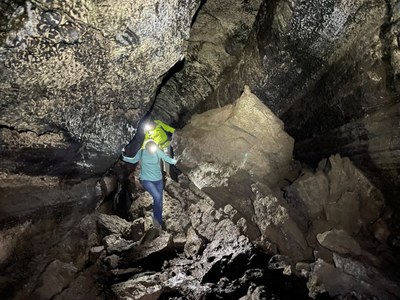
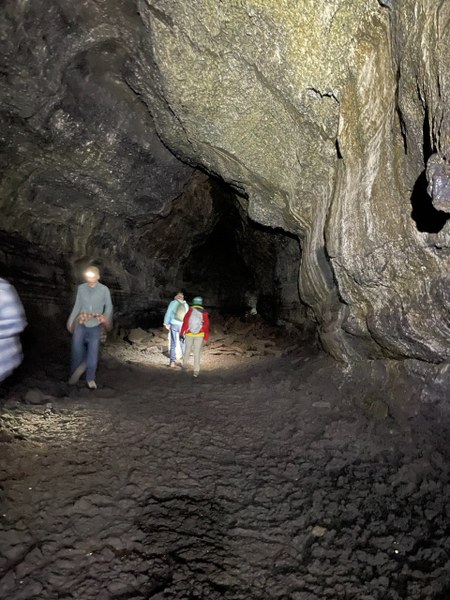
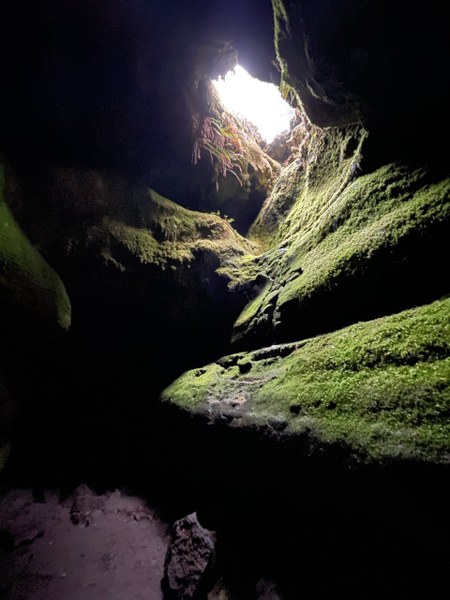
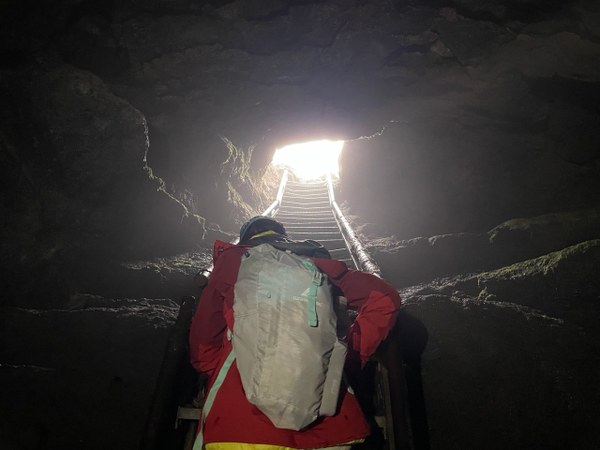
Photo credit: https://www.mountaineers.org/activities/trip-reports/day-hike-ape-caves
Images used under Fair Use for educational and informational purposes
Images used under Fair Use for educational and informational purposes
A Cave Born From Fire
Despite the name, no apes have ever lived here. The cave earned its unusual title from a local climbing group known as the “Mount St. Helens Apes” that explored the area decades ago. The cave itself was created by volcanic forces nearly 2,000 years ago, when molten lava flowed from Mount St. Helens. As the outer lava cooled and hardened, blazing rivers of molten rock continued moving underneath. When the lava drained away, it left behind an enormous hollow tunnel.
Mount St. Helens Science & Learning Center
For more information: https://www.mshslc.org/ape-cave/
Today, visitors can walk through the frozen pathway of an ancient river of fire.
Not bad for a weekend hike.
Choose Your Adventure
The beauty of Ape Cave is that there are really two adventures waiting underground.
The Lower Cave: Family-Friendly Exploration
If you’re traveling with younger adventurers—or simply want an easier experience—the Lower Cave route offers a relaxed journey into the underground world. The trail runs roughly three-quarters of a mile one way and provides a manageable experience with dramatic volcanic formations and plenty of opportunities to marvel at the cave’s unusual landscape.
Even though it’s considered the easier route, there’s still something thrilling about walking through a massive tunnel carved by lava thousands of years ago.
The atmosphere is cool, quiet, and just mysterious enough to spark imaginations.
The Upper Cave: Enter the Darkness
Then there’s the route for explorers seeking something a little more intense.
The Upper Cave is where the adventure turns up several notches.
This rugged 1.5-mile underground journey leads hikers through complete darkness, over uneven lava rock, through boulder fields, and eventually to an eight-foot lava rock wall climb. At times, your headlamp may reveal only jagged volcanic textures and endless blackness ahead.
No sunlight.
No trail signs.
Just you, your gear, and the feeling that you’re exploring somewhere few people ever experience.
Eventually, hikers emerge back into daylight and complete a 1.5-mile hike above ground to return to the trailhead—a satisfying finale after surviving the underground challenge.
Summer Outside, Winter Underground
One of Ape Cave’s biggest surprises is the temperature.
While the forests above may be basking in warm summer sunshine, inside the cave conditions remain a constant 42 degrees year-round. Step underground in shorts and a T-shirt and you’ll quickly discover nature doesn’t care about the weather forecast.
Layers matter.
Warm clothing matters.
And sturdy hiking boots become your best friend.
Bring More Light Than You Think You’ll Need
Perhaps the most important rule at Ape Cave is simple:
Bring backup light sources.
Not one.
Not your phone.
Multiple.
Headlamps are ideal because they keep your hands free while climbing and scrambling over rocky terrain. The cave contains absolutely no built-in lighting, and once you venture beyond the entrance, natural light disappears quickly.
The darkness is complete—and surprisingly humbling.
Protecting an Underground World
As wild and rugged as Ape Cave feels, it remains a delicate ecosystem. Visitors are asked not to touch the cave walls. Human skin oils can damage fragile cave slime and other sensitive formations that quietly exist in this volcanic environment.
Sometimes the best way to appreciate nature is simply to leave it exactly as you found it.
Add One More Stop: Trail of Two Forests
If Ape Cave leaves you fascinated by volcanic history, consider making one additional stop nearby at the Trail of Two Forests.
This short boardwalk trail feels like a hidden bonus level in your adventure. Visitors can climb through preserved tree molds—natural tunnels created long ago when lava engulfed standing trees and later flowed away.
It’s a brief experience, but one that makes the volcanic story of Mount St. Helens come alive in a whole new way.
Adventure Awaits Beneath Washington
Washington has no shortage of spectacular trails, mountains, and scenic drives. But Ape Cave offers something different.
It invites you underground.
Into darkness.
Into geology.
Into adventure.
Whether you choose a family-friendly walk or a headlamp-powered expedition into the unknown, one thing is certain: you’ll leave with stories that sound a little too wild to be made up.
And maybe—just maybe—you’ll find yourself wondering what other secrets are hidden beneath the forests of Mount St. Helens.
No reviews yet. Be the first to review!
Did you like this article? Provide a rating.